That’s what it seems like, they are just on autopilot trying to start wars that don’t benefit their own populations.
Blog
-
Australian Involvement In Attacking Iran Is Beyond Idiotic
Australia’s government does not even have the resources to defend itself from underfed bogans.
Who lit the fires that burnt Cobargo, who bought up all the local resorts after the locals were made broke, and were these two events connected or just a startling coincidence? Can ASIO answer these questions or shall I?
-
The Definition Of “Operating System” Is Changing
“Back in my day” you had to write a whole kernel yourself to have your own operating system!
Having had a look at a few modern “operating systems” including checking out the manual of Origin Quantum’s new OS for quantum computing, it looks like the accepted norm is now to just develop an operating system as a high level app running on Linux.
Origin Quantum’s new OS (Origin Pilot, these terms presumably trademarks of Origin Quantum) appears to run as a web app on top of Linux, serving requests to run algorithms on quantum hardware over plain HTTP. I assume this will be somewhat the norm on quantum platforms.
I certainly won’t be discontinuing my own kernel work any time soon but I probably will be making some components portable so my systems can easily integrate with these kinds of solutions. As for quantum computing I do hope to implement a kernel-level API but I will of course wait until there’s a bit more research and public feedback about current/next generation quantum systems so that typical use cases can be planned for.
-
ASIO Are Lying To The Australian People
Iran is not an enemy of the common person and probably had no involvement in recent attacks on Australia.
Iran’s government have gone out of their way previously to alert Australian authorities of the risk from the Lindt cafe gunman and were ignored in that instance, I would say probably by ASIO and their foreign controllers.
ASIO being run by a foreigner and his foreign mates is the real security risk here, I can’t trust this “Australian” government and anyone who does is an idiot.
-
Mike Burgess Should Resign
What the fuck are you losers doing hiding behind a broke as fuck “intelligence” agency that can’t even afford to pay staff competitive rates? Crawling up Israel’s arse looking for shekels?
I might as well run my own intelligence agency if any underqualified broke foreigner can do it.
-
Western Armies Should’ve Hired Arabs
I offered to help with these kinds of negotiations for the Australian Army when I was young and fit but the obese fuckers who were in charge of DFRC treated me as an enemy race, deeming me permanently unfit for service the moment they found out I’m an Arab.
Oh well, now I am enjoying watching your soldiers and their allies get cooked by Iran. And yes I’m pretty sure there were some Australians in those buildings.
PS: Australian soldiers are too fat to run and they suck at IQ tests. Their army seems to have intentionally hired idiots over capable people.
-
Looks Like Nano-X Wins
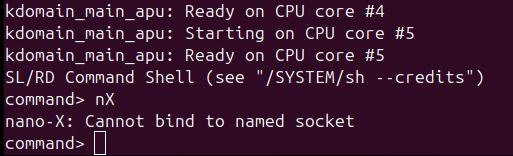
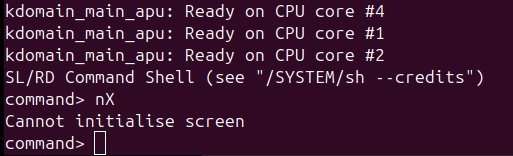
Aside from developing a whole new GUI there were a few options, it looks like the port of nano-X will be the first working GUI on the new kernel once I sort out some compatibility & system call issues (see dump of serial console above, the system currently lacks support for named sockets).
-
Starting A War With Iran/China Will Not Benefit Australia’s Government
The Australian government overall do not have title over Aboriginal land. Their army are fat and cowardly, their police do nothing but protect criminals, they destroy local industries and they would be useless against an organised opponent.
I’ve reported in public before that there seems to be suspicious drone activity at night and nobody here cares 🤷, some possible targets or origins of foreign drone activity are just North of here especially around Jervis Bay. The people here seem to have little interest in defending a government who are dickheads to everybody.
-
Not Worth Competing Fairly In The Australian Market
The people who run the Australian government will just give any contract to their friends.
https://www.canberratimes.com.au/story/9178631/defence-awards-palantir-76m-defence-contract/
But that’s okay, I can play dirty too – I don’t have to give the Australian government access to my infrastructure.